The Energy Transition’s Quiet Dependency: Copper
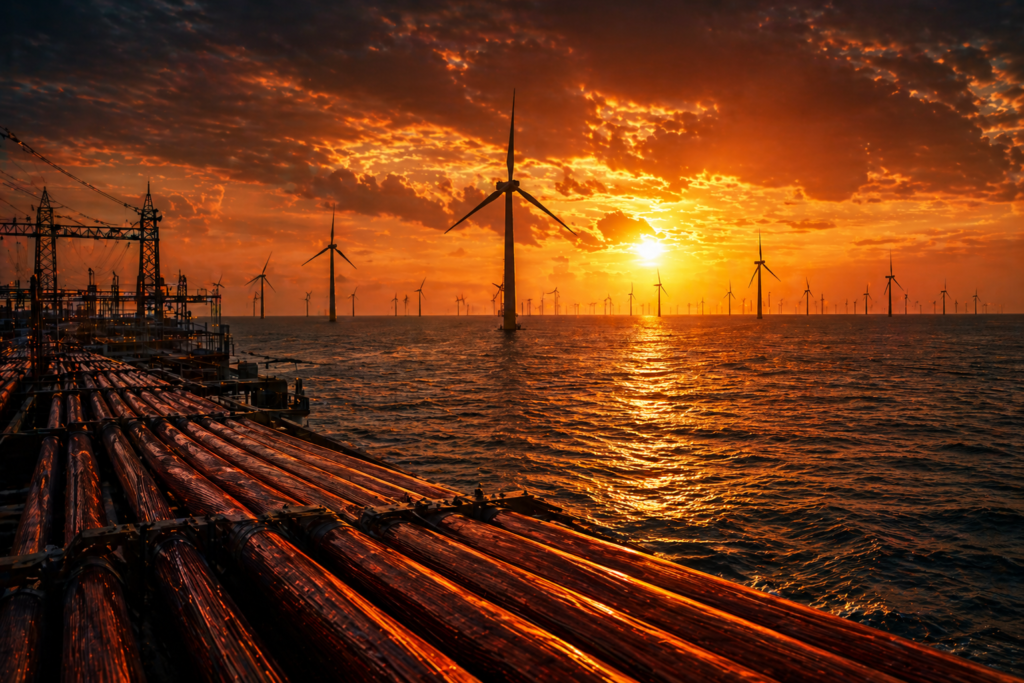
Solar panels, EV batteries, wind turbines, and power grids all run on copper. As the world accelerates its shift away from fossil fuels, we examine why refined copper is the metal the energy transition cannot happen without.
The Metal Nobody Is Talking About
When world leaders gather to discuss the energy transition, the conversation tends to focus on solar, wind, hydrogen, and batteries. The technologies are the headline. The infrastructure enabling them rarely is. But behind every solar panel, every wind turbine, every electric vehicle, and every upgraded power grid is a metal that makes all of it possible. That metal is copper.
Copper is not a new story. It has been central to electrical infrastructure for over a century. But the scale of demand that the global energy transition is about to place on copper supply is genuinely unprecedented. And the world is not yet fully prepared for what that means.
How Copper Became Indispensable
Copper’s role in the modern economy rests on a single, irreplaceable property: it is the best electrical conductor available at industrial scale and at a price the world can afford. Silver conducts electricity marginally better, but at a cost that makes it impractical for anything beyond specialist applications. Aluminium is cheaper and lighter but inferior in conductivity and durability for many uses. Copper sits in the middle of that equation, combining excellent conductivity, mechanical strength, corrosion resistance, and workability at a price that makes it the default choice for electrical infrastructure worldwide.
This has been true for a long time. What has changed is the volume of electrical infrastructure the world now needs to build.
The Energy Transition Is a Copper Story
The International Energy Agency has been explicit on this point. A clean energy system is significantly more mineral-intensive than a fossil fuel-based one. The reason is straightforward: fossil fuels store energy chemically and release it through combustion, requiring relatively little mineral input beyond the equipment itself. Renewable energy systems, by contrast, capture energy from the environment and convert, transmit, and store it electrically. Every step of that process requires conductive materials. And the dominant conductive material is copper.
Consider the numbers. A conventional internal combustion engine vehicle contains roughly 20 to 25 kilograms of copper. An electric vehicle contains between 60 and 90 kilograms, depending on the size and design of the battery pack and motor system. With global EV production scaling rapidly toward hundreds of millions of units per year over the coming decades, the copper demand from this single application alone is transformative.
Wind turbines tell a similar story. An onshore wind turbine requires approximately 3 to 4 tonnes of copper per megawatt of installed capacity. Offshore turbines, which are larger and more complex, require more. The global wind capacity additions being planned through 2030 and beyond represent a copper demand of tens of millions of tonnes.
Solar photovoltaic panels use copper in their wiring, inverters, and mounting systems. Utility-scale solar farms require extensive copper cabling to connect individual panels to inverters and then to the grid. The solar industry is scaling at a pace that was considered optimistic just five years ago, and every gigawatt of new capacity is a copper order.
Then there is the grid itself. The electricity transmission and distribution infrastructure connecting generation to consumption is almost entirely copper-dependent. As renewable generation expands, as EV charging infrastructure rolls out, and as industrial and commercial buildings electrify their operations, the grid must be upgraded, extended, and reinforced at enormous scale. The International Energy Agency has estimated that the world needs to add or replace 80 million kilometres of power lines by 2040. That is a copper requirement on a scale that dwarfs anything in the historical record.
The Supply Side Cannot Keep Up
Understanding copper demand in the context of the energy transition is the straightforward part of the analysis. The harder part is supply, and the picture there is considerably more challenging.
The world’s largest copper mines are concentrated in a small number of countries. Chile and Peru together account for roughly 40 percent of global mined copper output. The DRC and Zambia are significant producers. Beyond that, the supply base is relatively dispersed. And across almost all major producing regions, the same trends are visible: ore grades are declining as the richest and most accessible deposits are worked out, mines are going deeper and becoming more expensive to operate, and new large-scale discoveries are rare.
The pipeline of new copper projects being developed is not empty. But bringing a new copper mine into production takes 15 to 20 years from discovery. The projects being approved and funded today will not contribute meaningful production until the mid-2030s at the earliest. The gap between what is needed for the energy transition and what the existing and committed supply base can deliver through the late 2020s and into the 2030s is real, significant, and growing.
S&P Global published an influential analysis projecting that copper demand could nearly double by 2035, driven primarily by the energy transition. Their modelling suggested that even under optimistic scenarios for new mine development and recycling, a significant supply deficit would emerge within this decade. The numbers from other analysts vary, but the direction is consistent.
Recycling Helps But Cannot Close the Gap
Secondary copper, recovered through recycling of copper scrap and end-of-life products, already plays an important role in global supply. Roughly a third of global copper supply comes from recycled sources. As the stock of copper-containing products in the world grows, the eventual recycling potential grows with it.
But recycling has structural limits as a solution to the near-term supply challenge. The copper going into new electric vehicles, wind turbines, and solar installations today will not be available for recycling for 20 to 30 years, when those products reach the end of their operational lives. The recycling infrastructure itself requires investment and development. And the volumes required are simply too large for recycling alone to bridge the gap between projected demand and primary supply.
The conclusion the industry is reaching is consistent: the world needs significantly more primary copper production and significantly more refining capacity, and it needs both sooner than the current development pipeline can deliver.
What This Means for Africa
Africa holds an estimated 40 percent of the world’s known copper reserves. The Central African Copperbelt, stretching across the DRC and Zambia, is among the most copper-rich geological formations on the planet. West and East African nations have identified copper occurrences and early-stage deposits that have received limited development attention historically.
For decades, the dominant model has been to extract copper ore or concentrate in Africa and ship it to smelters and refineries in Europe, Asia, and the Americas for processing into the refined copper that global markets actually trade. The value addition happened elsewhere. The jobs happened elsewhere. The industrial expertise accumulated elsewhere.
The energy transition changes the strategic calculus around this model in a fundamental way. When demand is structurally higher and supply is constrained globally, the value of processing capacity increases significantly. Countries and platforms that can not only source copper but refine it to the LME-grade cathode standard are positioned to capture a disproportionate share of the value being created by the energy transition.
Africa has the resource base. What it has lacked is the industrial infrastructure to process that resource into the form the market needs. Building that infrastructure now, while the demand trajectory is clear and the supply gap is opening, is the industrial opportunity of the decade for the continent.
Nigeria’s Specific Position
Nigeria’s relationship to the copper economy of the energy transition is distinctive. It is not primarily a copper mining nation in the way the DRC or Zambia is. Its opportunity lies downstream of mining, in the processing and distribution of refined copper to serve its own industrial demand and the broader West African market.
Nigeria is building solar energy capacity. It has a national electrification agenda that requires enormous copper inputs. Its construction, manufacturing, and telecommunications sectors are growing. Its urban population is expanding. Every dimension of Nigeria’s development agenda is a copper demand driver.
And yet Nigeria currently has no domestic copper refining capacity of meaningful scale. All of the refined copper its economy consumes is imported, in foreign currency, at international commodity prices. The import bill is large, the foreign exchange cost is real, and the opportunity cost of not adding value domestically is compounding year by year.
A domestic copper processing platform in Nigeria would serve the local market, generate foreign exchange savings, create employment, and build industrial capability. It would also position Nigeria as a regional supplier at a moment when West Africa as a whole is beginning to industrialise and the demand for copper inputs is growing across the region.
The Quiet Metal at the Centre of Everything
The energy transition will be built on copper. The solar panels, the wind turbines, the electric vehicles, the charging networks, the upgraded grids: none of it works without the metal that has been conducting electricity quietly and reliably for over a century.
The world is beginning to understand what the energy transition actually requires in terms of material inputs, and the picture is clarifying around copper as the critical constraint. Supply is tightening. Demand is accelerating. The processing capacity to turn mined ore into refined metal is concentrated in too few places. And Africa, which holds a significant share of the world’s copper resources, has an extraordinary opportunity to build the processing infrastructure that the energy transition demands, on its own terms, for its own economic benefit.
The energy transition’s quiet dependency is copper. And copper’s next chapter has an African dimension that the world is only beginning to appreciate.
CBA Metals is developing an integrated copper processing platform in Nigeria to serve domestic industrial demand and global copper markets. To learn more or explore partnership opportunities, visit cbametals.africa.