The Copper Deficit Is Coming. Here Is What It Means for Africa
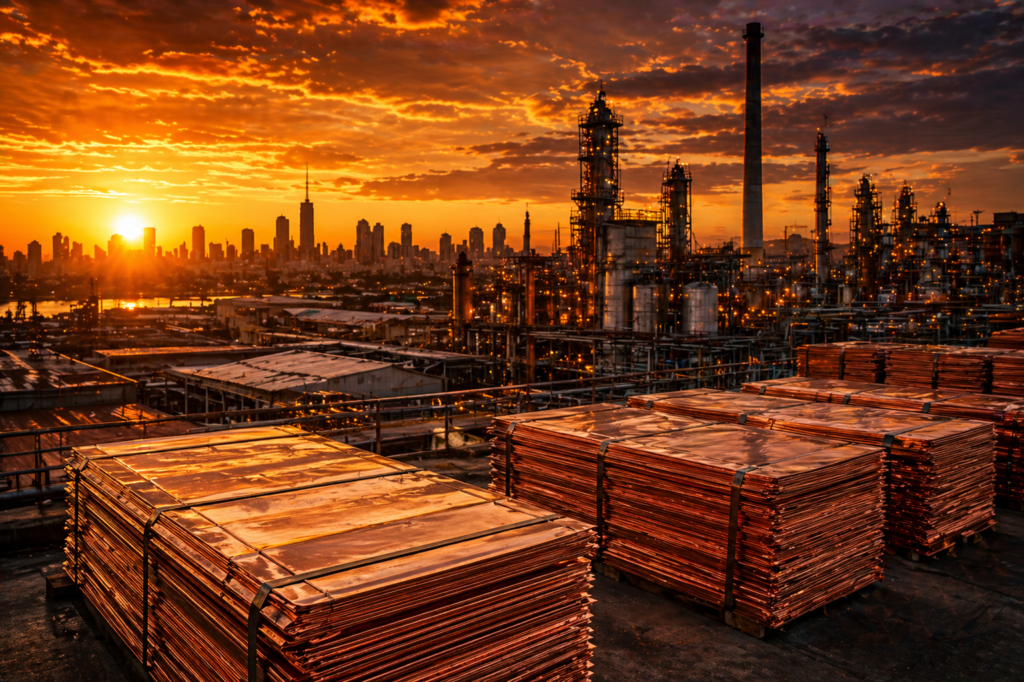
Global demand for refined copper is set to outpace supply by a widening margin through 2030. We break down the numbers, the drivers, and why Africa sits at the centre of the solution.
The Numbers Are Not in Dispute
Somewhere between now and 2030, the world will face a copper supply gap unlike anything the modern industrial economy has experienced. Analysts at major commodity research firms, international development banks, and mining conglomerates are in broad agreement on the trajectory even if they differ on the exact magnitude. Demand for refined copper is accelerating. Supply is not keeping pace. The deficit is coming.
The figures being cited are significant. The global copper market, which currently produces roughly 22 million tonnes of refined copper annually, is projected to face annual deficits running into the millions of tonnes by the end of this decade. Some estimates put the cumulative shortfall between now and 2035 at 10 million tonnes or more. Others are more conservative. None of them are reassuring.
For commodity markets, a supply deficit of this scale is not a minor correction. It is a structural shift that reshapes industries, reallocates capital, and creates entirely new winners and losers in the global economic order. And right now, Africa is positioned to be one of the biggest winners of all. The question is whether it is ready to act.
Why Copper Demand Is Accelerating
To understand why the deficit is coming, you need to understand what copper is used for and why that demand is changing so dramatically.
Copper is the world’s most important industrial metal after steel and aluminium. It conducts electricity better than virtually any other affordable material. It does not corrode easily. It can be drawn into wire, rolled into sheets, pressed into pipes, and alloyed with other metals to create materials with specific industrial properties. For over a century, it has been the backbone of electrical infrastructure everywhere on the planet.
But the last decade has introduced a new and exponentially growing source of demand: the global energy transition.
Every solar panel installed on a rooftop contains copper wiring. Every wind turbine erected on a hillside or offshore platform requires copper in its generators and transmission systems. Every electric vehicle rolling off an assembly line contains roughly four times the copper of a comparable internal combustion engine vehicle. Every charging station, every battery storage facility, every smart grid upgrade all run on copper.
The International Energy Agency has estimated that reaching global net-zero by 2050 would require a tripling of mineral inputs, with copper among the most critical. The energy transition is not just a climate story. It is a copper story. And the world has not fully reckoned with what that means for supply.
Why Supply Is Struggling to Keep Up
On the supply side, the picture is considerably less encouraging.
The world’s major copper deposits are getting older, deeper, and lower in grade. Chile and Peru, which together account for nearly 40 percent of global copper mine production, are dealing with ageing infrastructure, declining ore grades, water scarcity in key mining regions, and an increasingly complicated political environment around resource extraction. New large-scale copper discoveries have become rarer and harder to bring into production.
The timeline from discovery to production for a major copper mine is typically 15 to 20 years. That means any new mine that breaks ground today will not contribute meaningfully to global supply until well into the 2040s. Even with significant capital flowing into exploration and development, the supply pipeline cannot be turned on quickly enough to meet the demand trajectory being set by the energy transition.
Recycling and secondary copper recovery will play an important role in closing part of the gap. But the volumes involved and the time required to scale recycling infrastructure mean that secondary copper alone cannot solve the problem. The world needs new primary supply. And it needs processing capacity in the right places at the right time.
Where Africa Fits In
Africa holds an estimated 40 percent of the world’s known reserves of copper. The Democratic Republic of Congo and Zambia together form what is known as the Central African Copperbelt, one of the richest concentrations of copper ore on the planet. Tanzania, South Africa, and Nigeria are also part of the continental copper story in different ways.
For decades, the predominant model has been straightforward: African countries extract the ore, and the rest of the world refines it. Copper ore or concentrate leaves African ports and travels to smelters and refineries in Europe, Asia, and the Americas. The value addition that turns raw mineral into a refined, market-ready product happens elsewhere. So do the jobs, the economic multipliers, and the industrial expertise.
This model has served global commodity markets well enough. It has not served Africa.
The copper deficit changes the calculus fundamentally. When global supply is tight and demand is structurally higher, the premium on processing capacity increases. Countries and companies that can not only mine copper but refine it to LME-grade standard will be in an extraordinarily strong position. Africa has the ore. What it has historically lacked is the refining infrastructure. That gap is both the problem and the opportunity.
Nigeria and the West African Dimension
Nigeria occupies a particular position in this story. It is not the DRC or Zambia and does not have the same scale of established copper mining operations. But it has something equally important for the next phase of the copper economy: industrial demand, strategic geography, port infrastructure, and a policy environment that is increasingly oriented toward domestic value addition in the minerals sector.
Nigeria is Africa’s largest economy by GDP. Its construction sector, power infrastructure programmes, manufacturing base, and urban development pipeline make it one of the continent’s fastest-growing consumers of refined copper. Yet it imports virtually all of the refined copper it uses. Every metre of copper wire, every copper fitting, every copper component in Nigeria’s industrial supply chain arrives from abroad, in foreign currency, at full international commodity prices.
The opportunity here is not simply about mining. It is about processing, building the infrastructure to smelt and refine copper domestically, serve the Nigerian market directly, and create an export platform that can supply the broader West African region and global buyers through the Port of Lagos.
West Africa has no significant copper refining capacity of its own. The first platform to establish serious refining infrastructure in the region will not be competing for a share of an existing market. It will be creating the market.
Capital Is Beginning to Pay Attention
Global commodity capital is not blind to these dynamics. The last several years have seen a significant increase in investor interest in copper, driven by the combination of energy transition demand projections and the supply side constraints described above. Major mining companies have been acquiring copper assets, raising capital for development programmes, and talking publicly about the strategic importance of copper in ways that would have seemed unusual a decade ago.
Development finance institutions, including the IFC, the African Development Bank, and bilateral development banks from Europe and Asia, are also increasingly focused on the minerals processing opportunity in Africa, particularly in the context of the African Continental Free Trade Area and broader efforts to build African industrial capacity rather than simply extracting African resources.
The capital is available. The demand thesis is established. The supply gap is real. What is needed now is execution: the platforms, the infrastructure, the industrial capability, and the management teams that can turn the opportunity into a functioning business.
What It Means
The copper deficit is not a problem for Africa. It is an invitation.
For the first time in the modern history of the commodity cycle, the structural conditions favour African processing capacity. The demand is large enough, the supply gap is wide enough, and the policy environment is sufficiently oriented toward African value addition that a well-structured, well-capitalised copper processing platform in the right location can compete on the global stage, not as a peripheral supplier, but as a central participant in one of the most important supply chains of the coming decade.
The window is open. The question for African industrial platforms, African governments, and the investors watching this space is not whether the opportunity is real. It is who moves first, who builds right, and who is positioned when the deficit arrives. By all available analysis, it is not a matter of if. It is a matter of when.
CBA Metals is developing an integrated copper processing platform in Nigeria designed to serve domestic industrial demand and global copper markets. To learn more or explore partnership opportunities, visit cbametals.africa.